Store bikes and sports gear in a garage that still fits the car
· Editorial team newswithmiadenver.com
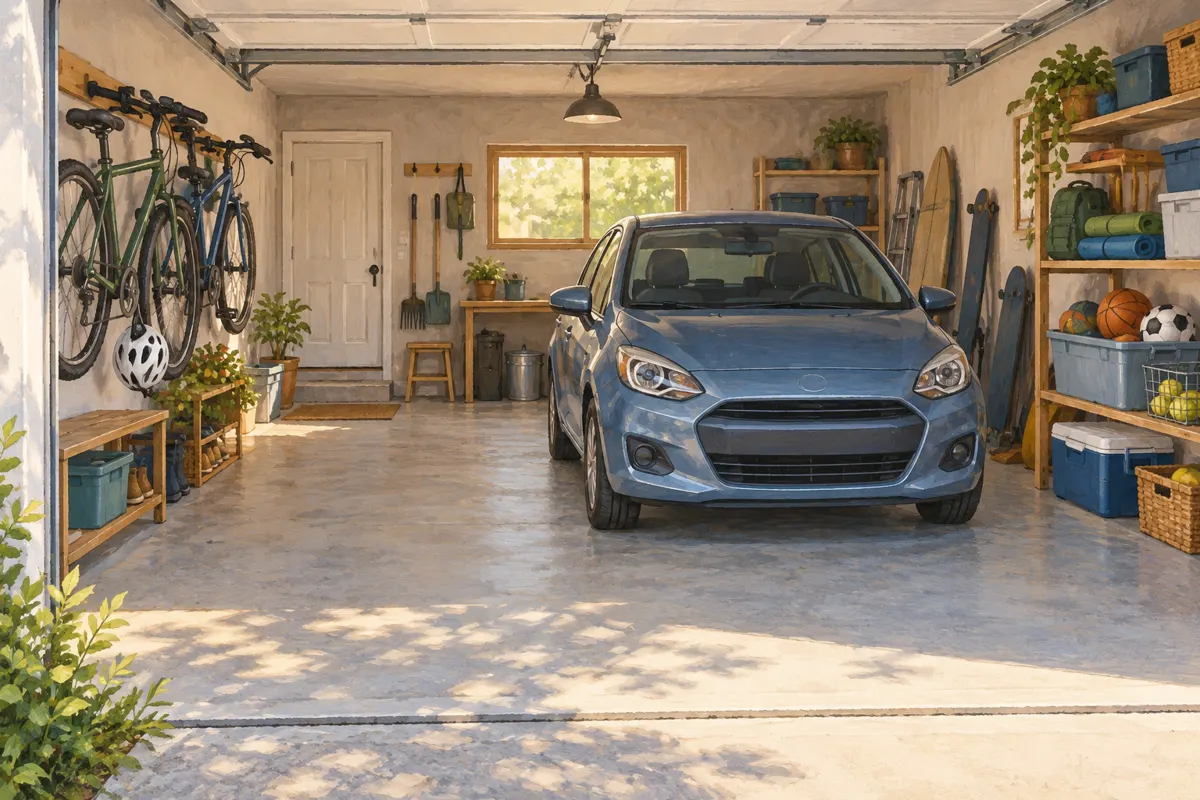
Reserve space for the parked car and its open doors first, then fit bikes and sports gear around that footprint. Keep frequently used equipment within easy reach and move occasional items onto suitable wall storage or upper shelves. The proposed layout below gives each activity a home while preserving a clear route through the garage.
Map the floor with the car parked
An empty garage can make a storage arrangement look more spacious than it is. Start with the car in its normal parking position. Open the doors people actually use, including the door needed for loading children or bags. If you unload through the trunk or hatch inside the garage, include that space too.
As a planning proposal, use removable tape to outline the parking area and the floor space that must stay clear. Check the following before choosing racks or shelves:
- Can everyone enter and leave the car without squeezing past equipment?
- Is there a clear walking route between the house door and garage exit?
- Can the garage door travel fully without touching stored items?
- Can each everyday bike reach the exit with the car parked?
- Will handlebars, pedals or shelf corners project into the door-opening space?
- Can you reach existing controls, outlets and equipment that need access?
Sort equipment before assigning storage
Gather the sports equipment together and sort it by sport or type. Group balls, rackets, helmets, footwear and protective pads so you can see what storage each group needs. Separate items you use regularly from seasonal equipment, outgrown gear and things awaiting repair.
Avoid buying containers for everything currently in the garage. First decide what you intend to keep. Then give prime space to the equipment your household actually takes out most often. A bulky item used occasionally should not force you to move several things every time you want a bike.
Choose bike storage you can use easily
Floor racks can suit bikes used daily when there is enough room to retrieve them beside the parked car. Wall hooks and racks free floor space, while ceiling pulley systems offer another option for lifting bikes out of the way. The right choice depends on both available space and how easily the rider can put the bike away.
- Place the bikes in the proposed storage position before installing anything. Include their full width, especially handlebars and pedals.
- Walk each bike to the exit with the car parked. Check whether you must lift, turn or move another bike.
- Match storage to the user. If a child cannot manage a hanging bike, consider an accessible floor position within the available space.
- For mounted storage, check the product’s bike compatibility, load limit and installation instructions, including the required mounting surface.
- Consider changing the arrangement seasonally: accessible parking for frequent rides and suitable elevated storage during less active months.
Create one grab-and-go gear zone
A proposed gear zone beside the bike area or a convenient exit can bring small items together. Use open bins for balls and separate compartments for helmets, pads and footwear. Wall racks can hold longer equipment such as bats, rackets and skateboards without spreading it across the floor.
- Group equipment by sport when family members usually take a complete set.
- Group shared items by type when several activities use the same gear.
- Keep frequently used bins within comfortable reach of their users.
- Choose accessible containers so returning equipment takes little effort.
- Keep balls contained instead of leaving them loose beside the car.
Reserve upper shelves for suitable seasonal equipment. Check shelf capacity and leave enough room to retrieve each item without disturbing neighboring gear.
Check the layout through an ordinary outing
Before treating the arrangement as finished, rehearse leaving and returning. Park the car, open the necessary doors, collect a bike and its gear, then put everything back. This household check can reveal awkward corners that measurements alone miss.
If an item repeatedly lands on the floor, reconsider its assigned location. It may be too high, too crowded or too far from where it is used. Adjust one position at a time, preserving the marked parking and walking space. Revisit the arrangement when bikes change size or a different sport becomes part of the routine.