Set up a homework station that packs away after dinner
· Editorial team newswithmiadenver.com
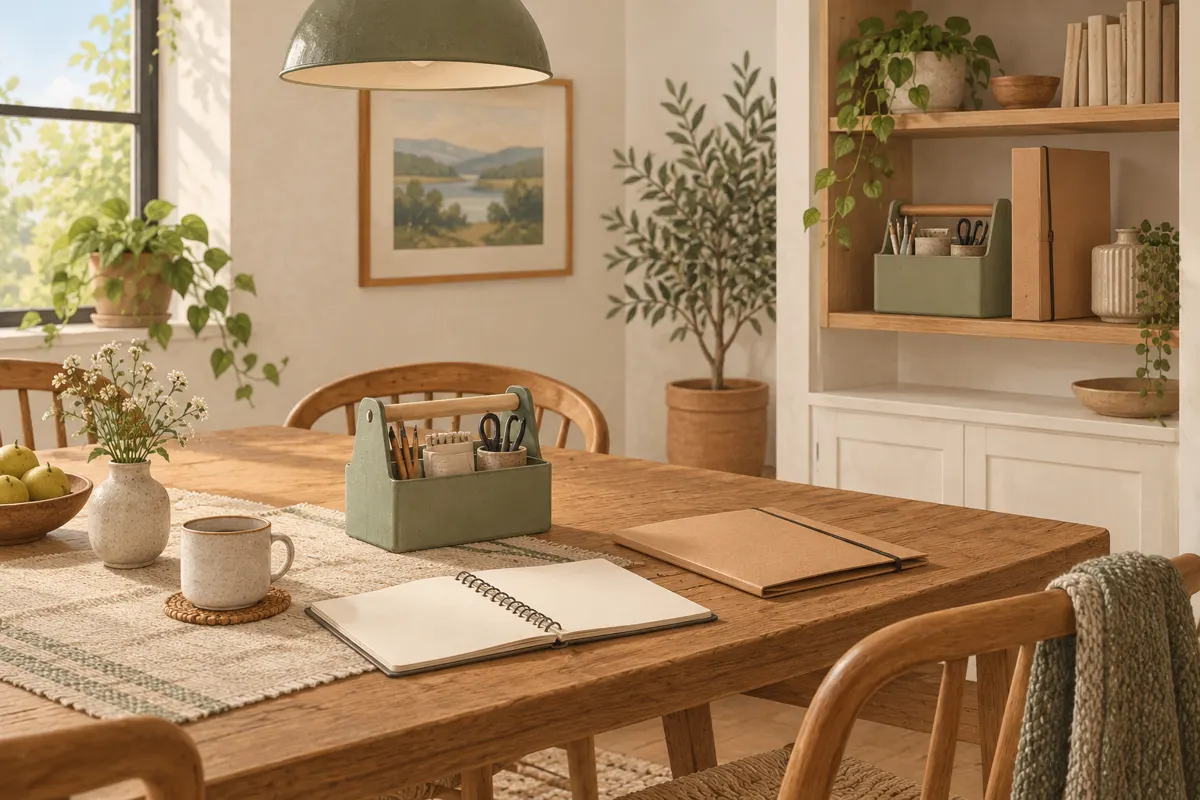
Keep everyday homework supplies in one portable caddy, papers in a folder and a clear place to store both near the dining table. Bring out only what the assignment needs, then return everything to its storage spot when work is finished. This proposed setup lets the same table handle dinner and studying without becoming permanent school storage.
Choose the storage spot before filling the caddy
Start with where the station will live when the table is needed for meals. A shelf, cupboard or existing storage bin can work. Choose somewhere the student can reach and where the supplies can stay together. Check that the container fits with its handle upright and that removing it does not require shifting several other things.
For this proposed arrangement, use a container you already own before buying anything. A handled basket, divided caddy or small tote is enough if it holds the essentials and is manageable when full. Keep books and devices separate if adding them makes the container awkward to carry. The aim is one predictable storage spot, even if it holds two separate pieces.
Stock supplies for ordinary homework
The supplied guide identifies writing tools, paper, subject-specific equipment and organizers as useful homework supplies. For a portable station, select the items the student actually uses regularly. There is no need to fit every craft material or spare notebook into the daily kit.
- Pencils, an eraser and a small sharpener with a container for shavings.
- A ruler and any other measuring tools required for current classes.
- A few colored pencils or highlighters, if assignments use them.
- Loose paper in a folder so it stays flat.
- An assignment planner, if the student uses one.
Give small items separate compartments or pouches so they are easy to find and return. Keep occasional project supplies elsewhere and bring them out for the relevant assignment. If siblings share the station, individual pencil pouches can sit inside a shared basket while each child keeps a separate paper folder.
Make the dining table ready for work
Choose a seat with enough room for an open notebook, the assignment and any device being used. Clear away meal items and wipe up crumbs or spills before putting papers down. Set the caddy to one side instead of in the middle of the working area; its job is to hold supplies within reach.
The source recommends adequate lighting and fewer distractions. At a shared table, a practical application is to use available daylight or a nearby lamp and agree on a quieter period for homework. Switch off a television that draws attention, and put unrelated phones away while the student works.
If homework happens after dinner, make clearing the dishes the cue to set up. If it happens before dinner, agree on when the table needs to be cleared. Allow enough time to collect loose papers so an unfinished assignment does not disappear into a stack of household mail.
Give unfinished work a clear place
A portable station needs somewhere for work that cannot go straight back into the backpack. A proposed system is one folder with two clearly marked pockets: “Still working” and “Ready for school.” Use it for active assignments rather than every worksheet that comes home.
Before packing away an unfinished task, add a short note about the next action, such as “Finish questions four and five” or “Check the paragraph ending.” Keep the necessary worksheet with that note. For a project too large for the folder, choose a separate temporary storage place and record its location in the planner.
Use the same packing routine each time
Make packing part of the homework session. This proposed sequence gives every item a destination and leaves the table available for its next use.
- Check the assignment planner and note anything that remains unfinished.
- Put completed work in the school bag and unfinished work in its folder.
- Return writing tools to their compartments and cap markers.
- Close and put away any device; gather its charger if it was used.
- Collect scraps, check the table and floor for loose items, and return the kit to its storage spot.
Occasionally check the kit with the student: replace missing essentials, remove papers that no longer belong there and take out supplies that are rarely used. If packing becomes cumbersome, simplify the contents. A useful portable station holds what is needed and is easy to put away.