Organize a small kitchen around everyday cooking tasks
· Editorial team newswithmiadenver.com
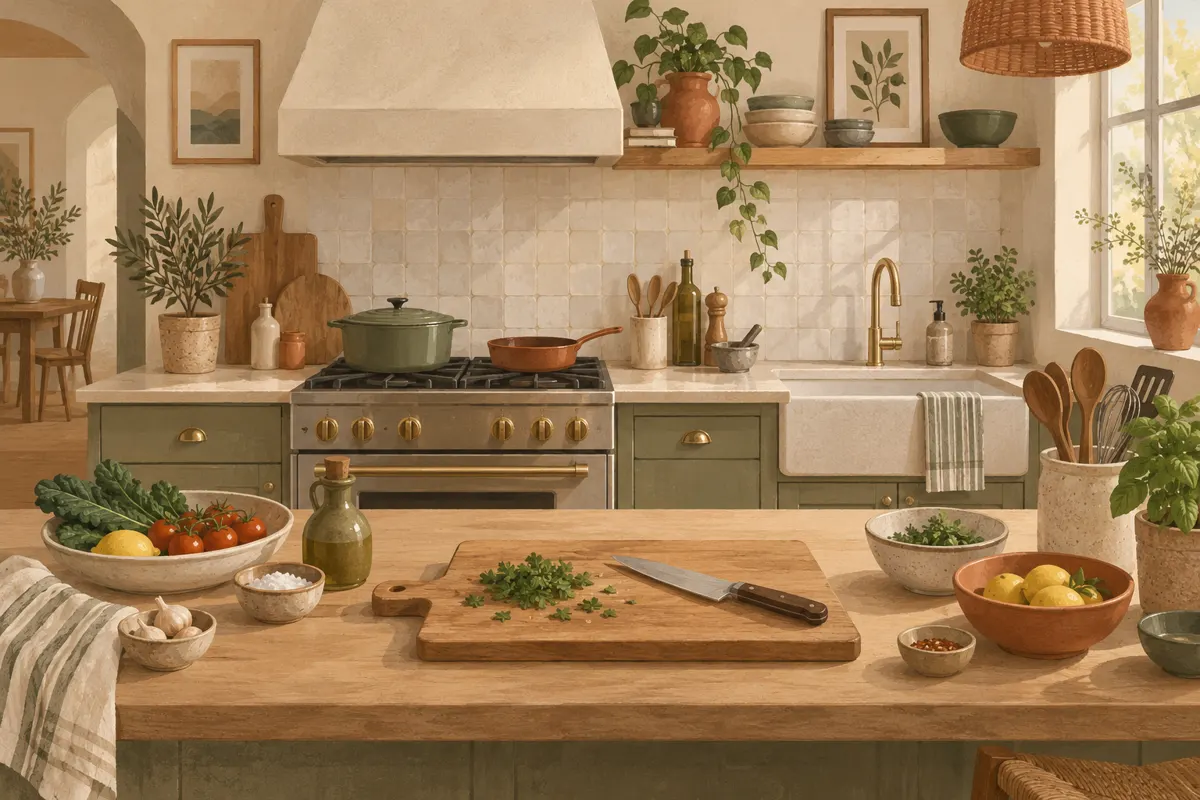
Organize a small kitchen by keeping the things you use together near the place you use them: knives and bowls beside your prep space, pans and cooking utensils near the stove, and cleaning supplies near the sink. Start with everyday meals, clear one useful stretch of counter, and move occasional-use equipment out of the easiest storage spots.
Start with the meals you actually cook
A kitchen can look tidy while still making dinner awkward. Before rearranging cupboards, walk through a familiar meal, such as pasta with vegetables. Notice where you collect ingredients, rinse produce, chop, cook and put leftovers away. Those actions should guide where things live.
The layouts below are editorial proposals to adapt to your kitchen. You do not need separate counters for every task; one clear surface can handle preparation and packing leftovers at different times.
- Choose one everyday meal and trace the steps from taking out ingredients to washing up.
- Gather the tools you use for it and identify their nearest practical storage spots.
- Move rarely used appliances and duplicate utensils out of prime drawers and counter space.
- Rearrange one task area at a time so you can judge whether the change helps.
Make one preparation area easy to use
Choose a counter section that can comfortably hold your cutting board. If possible, use a spot near the sink so rinsed ingredients have a short trip to the board. Keep this surface available instead of filling it with appliances you only use occasionally.
- Store cutting boards upright in a nearby cabinet slot or divider.
- Keep your everyday knife in a protective drawer insert or another secure holder close to the board.
- Put the peeler, grater and measuring spoons in the nearest practical drawer.
- Nest mixing bowls in an adjacent cupboard, with the bowl you use most easy to remove.
If drawer space is scarce, a small pegboard can hold frequently used tools. Choose only items that earn their place through regular use. Check that hanging tools do not interfere with the work surface or cabinet doors.
Keep cooking tools close to the stove
Give your everyday pan, saucepan, spatula and stirring spoon convenient homes near the cooking area. Avoid a deep stack that requires removing several pieces to reach one pan. A divider can separate lids or baking sheets so you can pull out the piece you need.
For a narrow kitchen, try a nearby drawer for utensils and the closest lower cabinet for cookware. If you prefer a utensil crock, keep it small and positioned where it leaves room to work. Store oven mitts somewhere accessible without reaching across a burner.
Group the seasonings you regularly cook with in an accessible cupboard or on a suitable shelf away from direct stove heat and steam. Matching jars are optional; readable labels and an arrangement you can maintain matter more.
Group ingredients by how you use them
Arrange pantry staples around familiar cooking routines. A practical proposal is to keep rice, pasta and canned ingredients together, while flour and baking supplies occupy another shelf. Put breakfast items where you can collect them without unpacking dinner ingredients.
- Place frequently used ingredients toward the front of an accessible shelf.
- Use a shallow bin for small packets that otherwise disappear behind larger containers.
- Keep extra packages behind the open package so you can see what is already in use.
- Reserve high shelves for light, occasional-use items that you can retrieve safely.
Apply the same visibility principle in the refrigerator: give foods consistent places and avoid burying leftovers behind unrelated items. Before buying bins, try the containers you already own and check that they fit the shelf.
Make cleanup and putting things away straightforward
Keep dish soap, a brush and a towel near the sink without crowding its edge. Give food containers and lids one accessible home near the surface where you pack leftovers. Nest compatible containers and separate lids so you can find a matching pair.
Place everyday plates and glasses where unloading the dishwasher or dish rack is comfortable. In a tiny kitchen, the cabinet nearest the sink may be the most practical choice, even if it also serves your preparation area.
After several ordinary meals, adjust anything that still causes repeated searching or awkward reaching. Move that item closer to its task and return everything to its assigned spot after cleanup. Buy an organizer only when you can name the specific storage problem it will solve.