Arrange balcony plant pots so watering stays manageable
· Editorial team newswithmiadenver.com
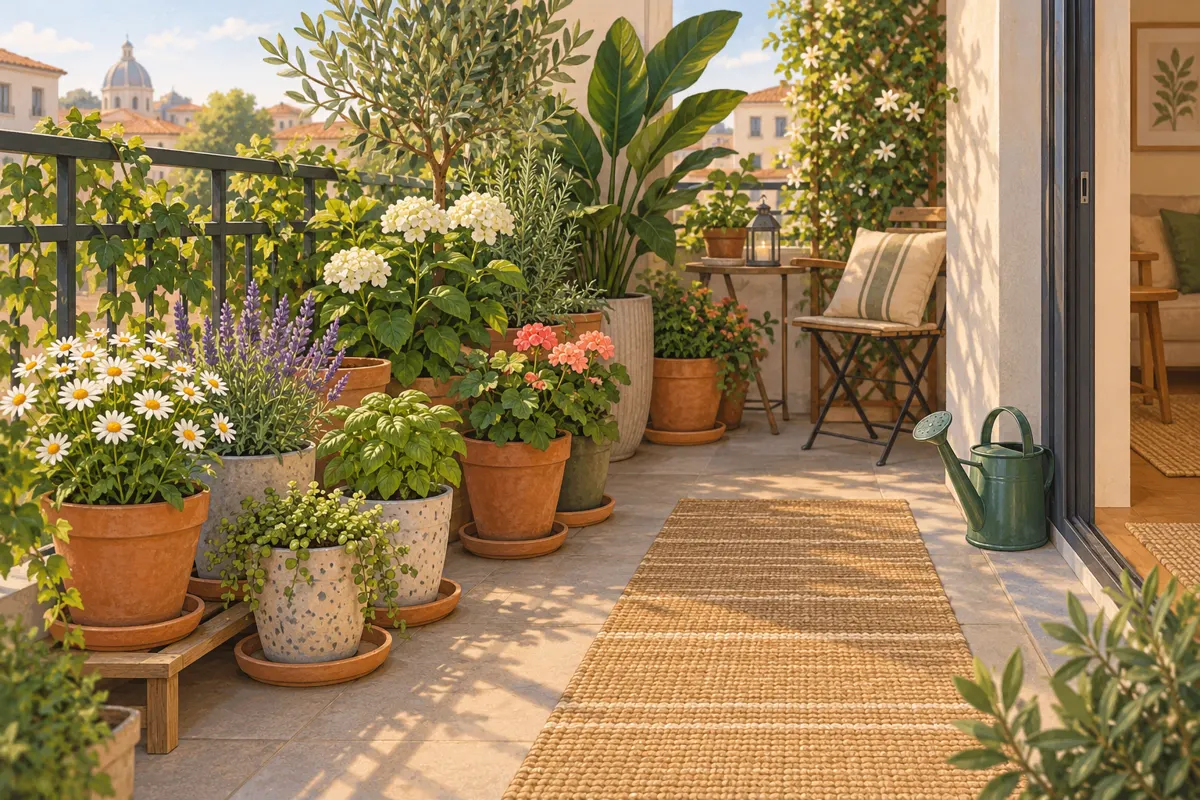
Arrange balcony pots in groups with similar watering needs, leave a clear route to every container, and place drip trays where you can easily check and empty them. Fit each group into suitable light first, then organize it for access. A manageable layout lets you check the soil, water at its surface, and deal with runoff without moving several other plants.
Start with light, wind, and your watering route
Before shifting pots, notice which parts of the balcony receive direct sun and which stay sheltered. Exposed corners and reflected heat can make some containers dry faster than others. Putting every plant beside the door may shorten your watering route, but the location still needs to suit the plants.
Our proposed starting layout is a clear path from the door, with pots along its edges and a convenient place to set down the watering can. Keep the doorway and floor drainage points accessible. Before adding large containers or railing planters, check your building’s restrictions on weight and attachments.
- Identify sunny, shaded, and wind-exposed positions.
- Walk the route while carrying your usual watering can.
- Leave enough room to turn, crouch, and reach the back pots.
- Move decorations that interfere with access or drainage.
Group pots by how their soil should dry
Use the care instructions for each plant to form watering groups. Keep plants that prefer drying between waterings together, and separate them from plants that need more consistent moisture. The supplied gardening guide identifies rosemary and thyme as herbs that prefer to dry between waterings, while Boston ferns favor moisture.
Our proposed arrangement is to give each group a distinct stretch of floor or shelf. This makes it easier to remember which pots need checking first. If plants share watering needs but require different light, create separate groups in appropriate positions rather than forcing them into one corner.
Treat grouping as a reminder to check, not a command to water every pot together. Containers in the same group can still dry at different rates. Check individual pots against their plants’ care requirements before adding water, especially after a change in sun exposure or wind.
Make every soil surface easy to reach
A pot is accessible when you can reach its soil and remove its tray without dismantling the display. Our proposed layout places taller plants toward the back and shorter containers near the path, with gaps wherever foliage would otherwise hide a pot. Avoid deep rows that require reaching blindly through leaves.
Stands and hanging containers can free floor space, but include them only where routine care remains practical. A hanging pot should be within comfortable reach for checking and watering. Keep large containers in positions where you can care for them in place.
- Reach the soil in each pot with your hand.
- Bring the watering-can spout to the soil without pushing through neighboring plants.
- Check that each drip tray can slide out or be emptied.
- Adjust any position that requires awkward stretching or moving another container.
Use drip trays without blocking drainage
Choose containers with drainage holes and use saucers or drip trays to catch runoff. This is particularly useful on balconies where water could reach a neighbor’s space. A tray catches water after it leaves the pot; it does not replace drainage holes.
Our proposed setup gives each pot an accessible saucer, or uses a shared tray only where every container remains easy to inspect. Leave room to see collected water and empty it after watering. Follow the container’s instructions for any self-watering reservoir, which serves a different purpose from a runoff tray.
Follow a short route and adjust trouble spots
Once the pots are arranged, use the same checking route each time. Our proposed routine is to start at the door, check one group at a time, water the pots that need it, and finish by checking trays and the floor for runoff. A consistent sequence makes an overlooked container easier to notice.
Let everyday care reveal what needs changing. If one pot is repeatedly difficult to reach, bring it forward. If a tray cannot be emptied comfortably, give it more clearance. When one container dries differently from its neighbors, reassess its position and grouping. Keep the arrangement flexible enough that a growing plant does not gradually close your watering route.